Recall Alert
There are recalls of ibuprofen and eye drops. Learn more >>
There are recalls of ibuprofen and eye drops. Learn more >>


Headaches are common among kids and young adults. While having a headache now and then is usually nothing to worry about, frequent headaches can significantly impact a child’s daily life.
Headaches in children are generally divided into two categories: Primary headaches and secondary headaches. Primary headaches occur on their own and are not a symptom of something else; secondary headaches are caused by a medical condition.
Types of primary headaches include:
Types of secondary headaches include headaches due to:
Chronic daily headaches are migraines and tension-type headaches that have been present for more than three months. They can be triggered by an infection, minor head injury, or overuse of pain medications. Boston Children’s Hospital treats chronic headaches in our Chronic Headache Program in Pain Medicine.
At Boston Children’s, our experienced Neurology Headache Program team works with you and your child to identify the causes of their headaches and coordinate comprehensive care.
To determine the type and cause of your child’s headaches and the most appropriate treatment, our team will:
Common questions we might ask include:
Headache pain is generally the result of muscle tension, expanded blood vessels in the head, and temporary changes in brain chemistry. Many things can cause headaches in children and young adults, including not drinking enough fluids, skipping meals, weather changes, stress, and irregular sleep schedules.
At Boston Children’s, our experienced Neurology Headache Program team works with you and your child to identify the causes of their headaches and coordinate comprehensive care.
To determine the type and cause of your child’s headaches and the most appropriate treatment, our team will:
Common questions we might ask include:
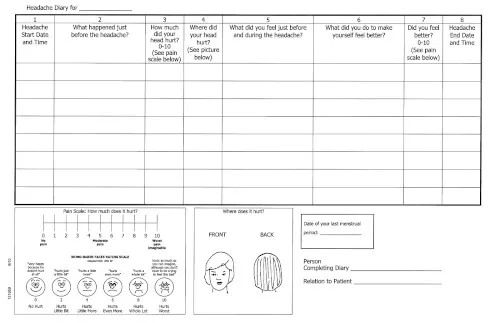
If your child is experiencing headaches, tracking symptoms in a headache diary can help track their frequency and identify potential triggers and patterns. A headache diary is also useful to your child’s care team.
Treating headaches in children involves an individualized approach based on the type and severity of the headache, along with the child’s overall health and needs. Treatment plans may involve:
Lifestyle and behavioral changes
Medications
Therapies
Alternative treatments
The long-term outlook for children with headaches varies depending on the type of headache, its severity, its cause, and the effectiveness of treatment. Most children with headaches can lead healthy, active lives with proper treatment.
A comprehensive treatment plan can help children who experience migraines or tension-type headaches see a reduction in pain frequency and intensity. This plan may involve lifestyle changes, vitamin supplementation, medications for immediate headache relief and frequency reduction, and complementary treatments such as cognitive behavioral therapy or biofeedback therapy.
Children with chronic headaches may require ongoing treatment, but early and effective care can reduce the frequency of their headaches and improve their quality of life. Headaches that are linked to other conditions, such as sinus infections or head injuries, usually improve once the primary concern is treated.
We specialize in diagnosing and treating headaches in children and young adults through a comprehensive approach. Our services include personalized care and recommendations, coordination with your child’s primary care provider, access to our multidisciplinary clinic located in Waltham, as well as care in Boston, Lexington, Peabody, and Weymouth.
Our multidisciplinary team includes:
Children with headaches are initially evaluated in our Neurology Headache Program. We may refer chronic or complex cases to our Chronic Headache Program in Pain Medicine.
Since a patient may receive headache care from her pediatrician or with a neurologist, coordinating care can be a challenge. Neurologists at Boston Children’s Hospital work to develop effective plans of care for our patients and families and partner with primary care physicians so that together we can provide the best care possible.
In order to make this collaboration even more effective, neurologists from Boston Children’s and primary care physicians from Harvard Vanguard Medical Associates (HVMA) have come together to develop new ways of working together. Our new approach allows children to receive a larger portion of their ongoing headache care from their pediatricians, strengthening their connection with their primary care providers and providing for more comprehensive, well-coordinated care. This approach should also shorten wait times for appointments in our neurology department and lower medical costs for families. Together with our partners at HVMA, we aim to deliver family centered care to our patients in the most appropriate setting.
We look forward to expanding this collaborative model to include other primary care provider groups, as well. We know that when we work closely with primary care doctors, it benefits our patients.
There is a lot still to be learned about children’s headaches. So headache specialists at Boston Children’s are engaged in research to learn more about how headaches happen, their effects and how to best treat them.
Boston Children’s neurologist and pain management specialist Alyssa LeBel, MD, and her colleagues are using a type of brain scan called functional magnetic resonance imaging (fMRI) to study how the brain activity of children and teens with migraines is different from the brain activity of kids who don’t have migraines. This information may lead to a better understanding of migraines — and, we hope, better treatments for them.
Boston Children’s physicians and psychologists are also studying how effective non-drug therapies, such as biofeedback, are for children with chronic headaches including migraines. Research like this can help to improve treatment protocols for children with headaches — both at Boston Children’s and at other institutions.
We value our interactions with our patients' primary care providers and are eager to make coordination and reporting of care as productive as possible.
In 2009, a group of specialists from Boston Children's Hospital, including Scott L. Pomeroy, MD, PhD, neurologist-in-chief, and Richard C. Antonelli, MD, MS, medical director for integrated care, sat down with primary care providers from Harvard Vanguard to develop strategies of collaboration for the care of our patients. Drawing on feedback from patient families, we designed new, coordinated systems for PCPs and sub-specialists to work together.
We look forward to expanding this collaborative model to include other primary care provider groups, as well.
